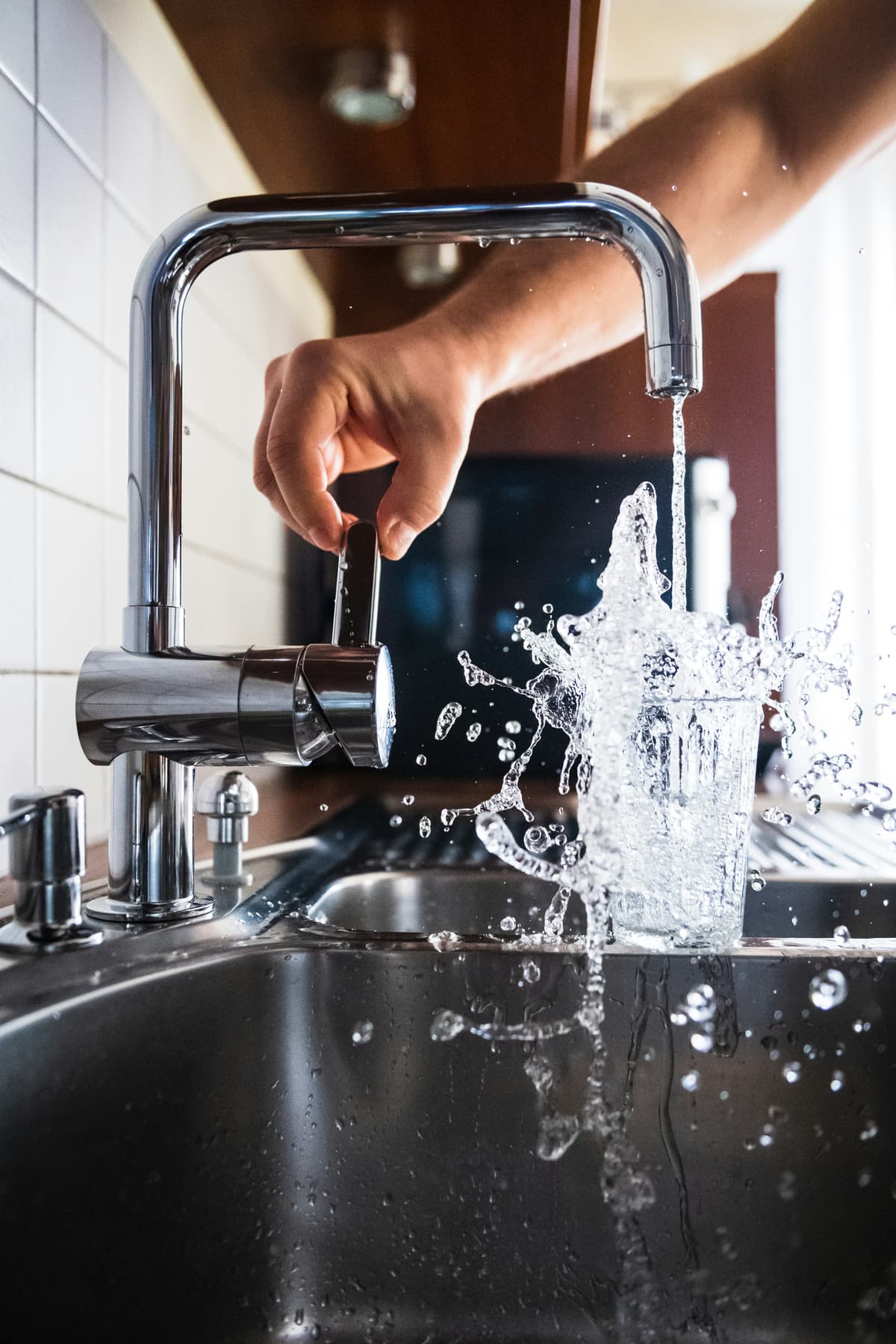
A faucet stops working.
A shutoff valve snaps when someone finally tries to turn it.
A water heater fails years earlier than expected.
Most homeowners assume these are unrelated problems.
In Las Vegas, they are often symptoms of the same hidden culprit: hard water.
After more than 25 years working in plumbing, electrical, carpentry, and home repair, I have seen hard water quietly destroy thousands of dollars worth of fixtures, valves, appliances, and plumbing systems.
Hard water is one of the biggest hidden causes of premature plumbing failure in Las Vegas homes.
What makes Las Vegas water so hard?
Hard water contains elevated levels of dissolved minerals, mainly calcium and magnesium.
Those minerals are not usually the scary part from a drinking standpoint.
The problem is what they do to the plumbing system over time.
Every time water moves through your home, tiny amounts of minerals are left behind. Over time, those minerals harden into scale and begin coating the parts of your home that are supposed to move, seal, heat, and flow freely.
Hard water affects:
- Shutoff valves
- Water heaters
- Faucets and showerheads
- Toilet components
- Supply lines
- Dishwashers
- Washing machines
- Ice makers
- Refrigerator water systems
Here in Las Vegas, water from the Colorado River carries a significant mineral load. Combined with our desert environment, homeowners often experience aggressive scale buildup throughout the home.
Why small hard water problems become expensive repairs
One of the biggest misconceptions I see is that hard water damage is mostly cosmetic.
Homeowners notice white spots on faucets or shower doors and assume that is the whole problem.
What concerns me is what is happening inside the plumbing system where nobody can see it.
Hard water acts like an accelerator on the aging process of your home. Every year, minerals continue building up inside components that were designed to move freely, seal properly, and operate efficiently.
Over time:
- Valves seize
- Rubber seals wear out
- Cartridges clog
- Water heaters lose efficiency
- Fixtures require more frequent repairs
- Appliances wear out sooner
Hard water rarely causes one dramatic failure overnight.
Instead, it slowly shortens the life expectancy of nearly everything connected to your plumbing system.
A real Las Vegas example
A homeowner recently called because a bathroom faucet had almost no water pressure.
They assumed the faucet had failed.
The faucet was not the real problem.
Years of mineral buildup had clogged the aerator, restricted the supply line, and partially seized the shutoff valve below the sink.
What looked like a simple faucet issue was actually evidence of hard water damage occurring throughout the home.
That is why I do not just look at the fixture that failed.
I look at the system around it.
1. Shutoff valves slowly seize up
Shutoff valves are one of the most overlooked components in a home until an emergency happens.
Hard water fills these valves with mineral deposits until they become difficult or impossible to operate.
When a pipe leaks or a fixture fails, homeowners often discover the valve will not turn.
A simple repair can suddenly become more expensive because the valve itself must be replaced before work can begin.
More importantly, a failed shutoff valve removes your ability to stop water quickly during an emergency.
2. Water heaters work harder and die younger
Water heaters are one of the most expensive plumbing components in the home.
Inside the tank, sediment accumulates year after year. This layer of scale acts like insulation between the burner or heating elements and the water.
That can lead to:
- Longer heating times
- Higher energy bills
- Reduced efficiency
- Shorter equipment lifespan
If your water heater sounds like it is popping, rumbling, or boiling gravel, hard water is often the reason.
That sound is not just annoying.
It is your water heater telling you sediment has built up inside the tank.
3. Faucets and showerheads lose pressure
This is often the first symptom homeowners notice.
Mineral buildup accumulates inside aerators, cartridges, and showerheads until water flow becomes restricted.
Many people replace the fixture without addressing the underlying cause.
A year or two later, the same issue returns.
That is because the faucet was only where the problem showed up.
The hard water was affecting the whole system.
4. Toilets wear out faster
Hard water is tough on the internal components inside your toilet tank.
It can affect:
- Fill valves
- Flappers
- Seals
- Moving components
If your toilet runs randomly, fills slowly, or makes unusual noises, mineral buildup may be contributing to the problem.
These parts are not expensive by themselves, but repeated repairs add up.
5. Appliances quietly lose efficiency
Hard water does not stop at plumbing fixtures.
Dishwashers, washing machines, ice makers, and refrigerators all experience additional wear when mineral buildup accumulates inside components.
Many appliances are replaced years earlier than necessary because hard water forces them to work harder than intended.
That is one reason hard water damage can feel invisible.
You do not always see one big failure.
You see a pattern of things wearing out too soon.
6. Pipe restrictions and hidden plumbing problems
Mineral buildup gradually reduces the effective diameter of water pathways.
As restrictions increase, pressure and flow can become inconsistent throughout the home.
In older plumbing systems, scale buildup combined with corrosion can create significant restrictions over time.
If multiple fixtures have weak flow, the issue may not be one faucet.
It may be a larger plumbing restriction.
Warning signs to watch for
Hard water damage usually leaves clues before a major repair is needed.
Watch for:
- White mineral deposits around fixtures
- Low water pressure
- Water heater popping or rumbling noises
- Recurring plumbing repairs
- Toilets that run or fill slowly
- Stiff shutoff valves
- Cloudy dishes and glassware
- Appliances that seem to struggle
- Showerheads that clog repeatedly
- Faucets that lose pressure after cleaning
The earlier you notice the pattern, the easier it is to prevent larger repairs.
Hard water does not damage one fixture. It damages everything.
This is the most important point homeowners should understand.
When a faucet fails because of hard water, the issue usually is not isolated to that faucet.
Hard water touches:
- Every shutoff valve
- Every toilet
- Every sink
- Every shower
- Every appliance
- Every supply line
- Every water heater
If one component is showing significant mineral buildup, there is a good chance similar wear is occurring elsewhere in the system.
That is why I do not just look at the fixture that failed. I evaluate the overall condition of the plumbing system and try to identify what may be next.
Typical repair costs in Las Vegas
Prices vary with the scope of work, the age of your plumbing, and whether hard water has caused secondary damage.
These ranges are not quotes, but they help homeowners understand what is common:
- Water heater replacement, tank: $900-$1,800
- Tankless water heater replacement: $1,500-$3,500
- Shutoff valve replacement: $120-$350 per valve
- Faucet cartridge or fixture repair: $80-$300
- Toilet tank component repair: $75-$250
- Appliance repairs or early replacement: varies widely
An on-site inspection can determine whether scale has caused related damage such as corroded fittings, restricted supply lines, or access issues that increase costs.
DIY safety: what you can handle
There are smart, safe steps homeowners can take to reduce hard water symptoms.
Most homeowners can usually handle:
- Cleaning aerators and screen filters
- Soaking removable showerheads in vinegar or mild descaler
- Replacing simple aerators or showerheads
- Watching for recurring mineral deposits
- Checking toilet tanks for worn flappers and fill valves
Some homeowners may also flush a water heater if the manual recommends it and they are comfortable following the safety steps exactly.
That means power or gas off, cold water handled correctly, safe draining, and no guessing.
When to call a professional
Call a professional if:
- Shutoff valves are stuck or leaking
- You cannot fully isolate the water supply
- The water heater is leaking, popping, rumbling, or near failure
- Gas or electrical connections are involved
- Pressure is weak at multiple fixtures
- You see corrosion, hidden leaks, or poor access
- The repair could create water damage if something goes wrong
When in doubt, take a quick photo, turn off the nearest shutoff if it is safe, and call for an inspection.
A short diagnostic visit can prevent an attempted DIY repair from becoming a larger job.
Final thoughts
Hard water rarely causes dramatic failures overnight.
Instead, it slowly reduces the lifespan of nearly every plumbing component in your home.
Valves wear out sooner.
Faucets clog sooner.
Toilets require more repairs.
Water heaters become less efficient.
Appliances work harder.
The good news is that many of these issues can be identified early and corrected before they become expensive repairs.
If you are seeing signs of hard water damage in your Las Vegas home, a proactive inspection today can often prevent much larger repairs tomorrow.