
The Fading Craftsman · Episode 4
The Last Craftsmen
A eulogy for the way of building things well, and the people who carried it.
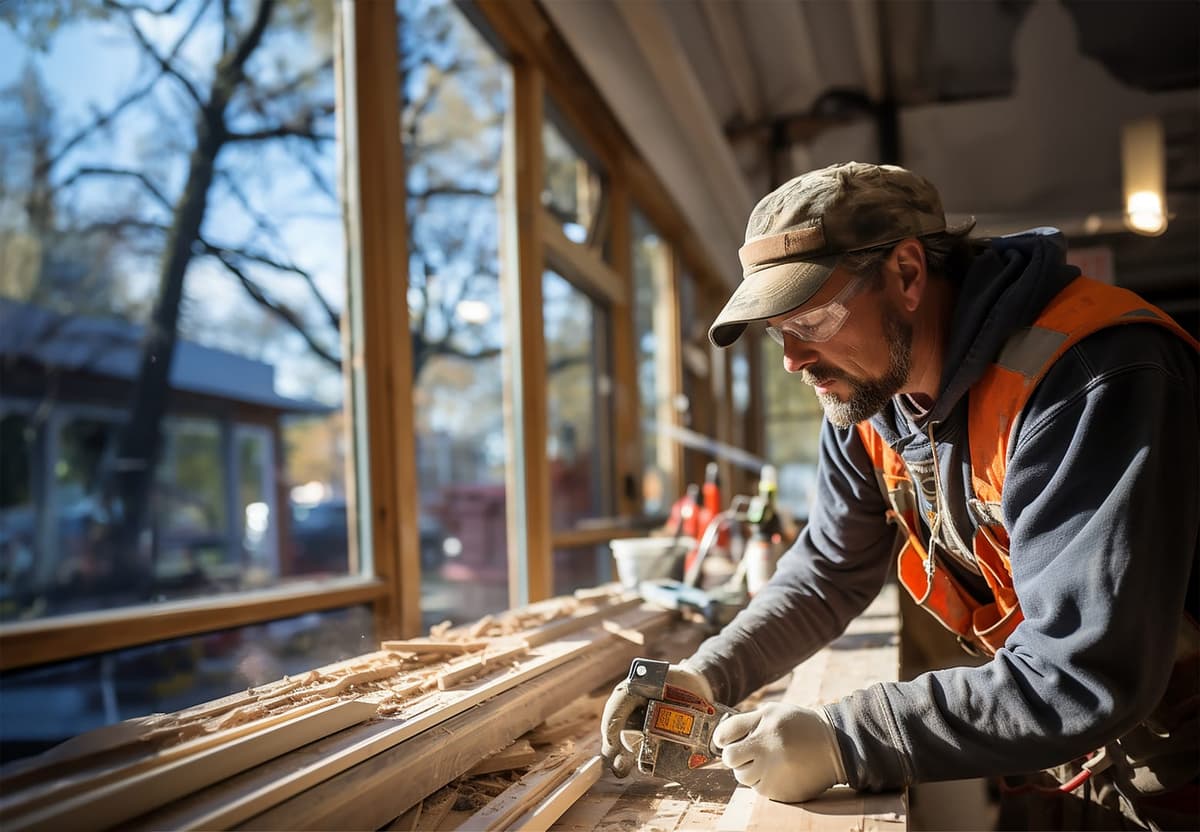
I want to tell you about a carpenter named Ray.
He was slow.
Painfully slow.
The kind of slow that makes project managers sweat through their shirts and general contractors avoid eye contact.
Every cut was measured twice.
Sometimes three times.
He would set a piece of trim, step back, look at it the way a man looks at something he loves, then pull it and start over.
One day I asked him why he spent so much time on things nobody would ever see.
He shrugged and said, "Because I see it."
Ray is retired now.
His knees gave out before his standards did.
And the guys coming up behind him, the ones who will be closing walls and hanging doors for the next thirty years, most of them never worked a day beside someone like him.
That is not a complaint.
That is a eulogy.
What We Actually Had
Before we talk about what we are losing, we should be honest about what it was.
It was not nostalgia.
It was not simpler times.
It was a specific kind of knowledge.
Earned slowly.
Passed person to person.
Impossible to download.
You do not notice a door that closes cleanly.
You do not notice a floor that does not bounce under your feet.
You do not notice plumbing that stays quiet when you shower.
But you have noticed all of those things because someone, somewhere, got them right.
Some tradesperson you will never meet, on a job they finished decades before you moved in, cared enough to do it properly.
Their work disappeared into your walls and floors and ceilings.
You have been living inside it ever since without a second thought.
I once worked on a 1920s bungalow where the original builder had signed his name on the back of a baseboard.
Pencil.
Perfect cursive.
Still legible after a hundred years.
He did not sign it for recognition.
He signed it because he expected his work to outlast him, and he wanted whoever found it to know he was not ashamed of what they would find.
That is what we had.
That is what we are losing.
Every Building Is a Time Capsule
Every building is a time capsule.
Someday, someone will open a wall you closed.
They will see the wiring you ran, the framing you nailed, the plumbing you sweated in at the end of a long Friday.
They will know, in about thirty seconds, whether you cared.
That is the strange accountability of this work.
You can cut every corner in private.
You can tell yourself nobody will ever know.
And for years, maybe decades, you might be right.
But walls get opened.
Ceilings come down.
Floors get pulled up.
Houses outlast almost everyone who touched them.
Ray knew this.
That is why he worked the way he worked.
Because he would see it.
And because someday, someone else would too.
Who Killed It
The craft did not fade because tradespeople got lazy.
Most of them are working harder than ever, on tighter schedules, with cheaper materials, for clients who were already promised a number that does not have room for doing it right.
The system changed.
Someone decided speed was more valuable than longevity.
Someone decided the homeowner will not know the difference was an acceptable sentence to say out loud.
Someone decided the job after this one was already behind, so this one just had to be close enough.
I have been on jobs where the paint was still wet when the appliances arrived.
I have seen shimmed vanities where the shim was a folded pizza menu.
I have watched repairs get done in ways that guaranteed a callback in eighteen months because eighteen months from now was someone else's problem.
We did not run out of craftspeople.
We built a system that punishes the ones who are left.
The Apprentice That Never Arrived
When Ray started, someone slowed down.
Someone answered questions.
Someone corrected him.
Someone let him ruin material and then showed him why it happened.
Someone had enough time, or at least enough conviction, to teach.
That is the part people forget.
Craftsmanship is not inherited automatically.
It has to be transferred.
One person has to stop long enough to say, watch this.
One person has to care enough to explain why the shortcut is not worth it.
One person has to let the apprentice struggle through the task instead of taking the tool back after thirty seconds.
Today, that is harder.
The apprentice is expected to produce on day one.
The foreman does not have two hours to teach.
The schedule will not allow it.
The budget will not reward it.
So the apprentice never becomes the master.
Not because he could not.
Because nobody could afford to let him learn.
What Dies With Them
Here is what does not make it into any training manual.
A homeowner sees a crack in the drywall.
I see the house settling because the soil was not compacted right.
I see the patch someone did five years ago.
I see the next crack that is going to appear six months from now.
Same crack.
Different eyes.
That is not a skill you learn in a weekend course.
It is not a YouTube video.
It is memory, compressed and layered.
It is every job you have ever done whispering, I have seen this before.
Craftsmanship is pattern recognition built over decades.
People think craftsmanship is about using tools.
It is not.
The tools are easy.
The hard part is knowing which tiny detail matters today because you have seen what happens five years from now when it does not.
That is what experience buys.
Time.
Borrowed.
And when the people who carry that experience retire, get injured, or simply wear out, the pattern recognition does not transfer automatically.
It goes with them.
We are not just losing workers.
We are losing a way of seeing.
The Hidden Damage
The real cost of all this is not measured only in repair bills.
It is measured in distrust.
I have walked into homes where the homeowner watched me like I was going to steal something.
Not because of anything I did.
Because of the last guy.
And the guy before him.
Every sloppy job poisons the well a little more.
Every shimmed vanity.
Every wire nut left loose inside a wall.
Every patch that looked fine until it did not.
Every door that never latched right.
Every leak someone "fixed" with caulk instead of finding the source.
It all adds up to a world where people stop trusting the people who are supposed to take care of their homes.
Cheap work does not just fail.
It spreads.
Building Is an Act of Respect
Good work is respect made visible.
Respect for the homeowner.
Respect for the next tradesman.
Respect for the house.
Respect for your own name, even when your name is not written anywhere.
When no one will ever see the screw behind the trim, you still drive it straight.
When the wall is about to be closed, you still clean up the wiring.
When the fitting is hidden in a cabinet, you still make it neat.
When the repair will be painted over, you still do the prep.
That is not perfectionism.
That is character.
A lot of people confuse craftsmanship with luxury.
It is not luxury.
Craftsmanship is the decision to care when caring is not required.
What We Owe the Dead
Here is the thing about eulogies.
They are not just for grieving.
They are for accounting.
For saying out loud what a person meant, so that meaning does not disappear with them.
Ray meant something.
The builder who signed that baseboard meant something.
The plumber who ran pipe so clean and tight it is still holding pressure a century later meant something.
What they meant was this:
The work is worth doing right, even when nobody will know the difference.
Especially then.
Craftsmanship is not genetics.
It does not pass automatically from one generation to the next.
It passes through stories.
Through repetition.
Through correction.
Through someone slowing down long enough to say, here, let me show you.
Through a journeyman who decides the next person on the crew is worth the time.
If we want it to survive, we have to act like it matters.
Not just talk about it.
Act like it.
The Young Guys Are Not the Enemy
I know it is easy to say younger people do not want to work.
I understand why people say it.
I have seen plenty of guys who did not want to pick up tools, did not want to sweat, did not want to listen, and definitely did not want to start at the bottom.
But I have also seen young electricians, plumbers, welders, mechanics, and carpenters who work harder than people twice their age.
Curious.
Patient.
Quiet.
Hungry to learn.
They remind me of Ray before Ray became Ray.
So I do not think the next generation is hopeless.
I think the best of them are still out there.
There just are not enough of them, and too many never get close enough to a real craftsman to become one themselves.
That is the tragedy.
Not that young people cannot learn.
That fewer of them are ever invited into the room where the real learning happens.
The Future Is Still Being Built
Every civilization leaves something behind.
Some leave books.
Some leave roads.
Some leave monuments.
Ours leaves houses, schools, hospitals, restaurants, churches, bridges, shops, and neighborhoods.
Every one of them was built by people whose names we will never know.
But we still live inside their decisions.
That is why this matters.
Craftsmanship is not just about prettier trim or cleaner pipe runs.
It is about whether the world we leave behind is stronger or weaker than the one we inherited.
The good news is that craftsmanship is not gone.
Not yet.
There are still people who care.
There are still young workers worth teaching.
There are still homeowners who can tell the difference.
There are still tradesmen who refuse to make "good enough" the standard.
But none of it survives by accident.
It survives because someone chooses to pass it on.
The Time Capsule
Sometimes I still think about Ray.
I wonder how many houses I will walk through over the next twenty years that still carry his fingerprints.
Perfect miters.
Quiet doors.
Trim that still fits.
Cabinets that still hang square.
Nobody living there will know his name.
But they will live inside his standards every day.
That is the strange thing about craftsmanship.
It can outlive the craftsman.
It can keep serving people who never knew the person who made it.
It can stay behind long after the truck is sold, the tools are packed away, and the knees finally give out.
Ray knew this.
That is why he worked the way he worked.
Because he saw it.
Because someday, someone else would too.
Final Thought
We are not just losing craftspeople.
We are losing proof that it is possible to care about work that nobody grades, nobody photographs, and nobody notices until it fails.
That proof matters.
Maybe more now than ever.
Because one day, every master hangs up the toolbelt for the last time.
The real question is not whether experienced craftsmen will retire.
The question is whether someone was standing beside them while they worked.
Ray was right.
He saw it.
And now, so do I.
Need Work Done Right?
Honest repairs, diagnostics, and craftsmanship that holds.
Read Next
Skilled Trades • Next Generation
Where Have All the Craftsmen Gone?
If craftsmanship is fading, where did the craftsmen go? A look at mentorship, experience, and the gradual disappearance of skilled knowledge.
Continue →
Las Vegas • Local History • Trades
Built Fast, Fixed Later: The Hidden Legacy of Las Vegas' Housing Boom
A veteran Las Vegas handyman on what the city's explosive housing boom got right, what it got wrong, and what homeowners living in those houses are dealing with today.
Continue →
Skilled Trades • Trust
The Fading Craftsman: How Low-Quality Work Broke Trust in the Trades
Shortcuts break homes and trust. A veteran handyman on how true craftsmanship restores safety, durability, and confidence for homeowners.
Continue →