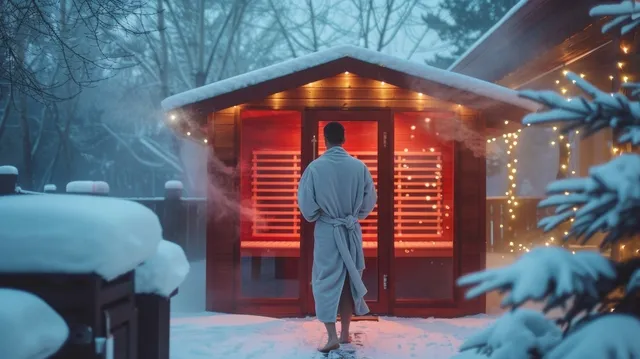
The First Places Budget Saunas Fail (And What Those Problems Reveal About Quality)
Most budget saunas fail in the structure, electrical design, heat distribution, or wood quality — not the heater. Shop for construction quality before features.
Typical Cost
$800 – $4,000+
Severity
High
DIY Friendly
Rarely
Time
Days to Weeks

Thin Structure
Weak wall panels, loose joints, and lightweight lumber fail under repeated heat cycles.
Electrical Shortcuts
Vague requirements, undersized circuits, and shared outlets create safety and performance risks.
Uneven Heat
Poor heater placement and weak insulation create hot and cold zones that never balance out.
Low-Grade Wood
Cheap lumber splinters, twists, and releases chemical smells once heat enters the picture.
What I Usually Find
Call Today If You Notice
- ◆Warm plugs or cords during operation
- ◆Breaker trips repeatedly during sauna sessions
- ◆Sauna cannot hold temperature after six months
- ◆Door no longer seals properly
- ◆Electrical requirements listed as 'standard outlet'
“The heater usually isn't the first thing that fails. The shortcuts fail first.”
A homeowner calls me because their new sauna won't hold temperature.
The heater works.
The lights work.
Nothing looks broken.
Yet twenty minutes into a session, one side feels hot, the floor feels cold, and the door no longer closes quite right.
The sauna is only six months old.
That's usually when the real inspection begins.
Quick Verdict
Most budget saunas fail in four places:
- Structure
- Electrical design
- Heat distribution
- Wood quality
The heater is rarely the first problem.
The shortcuts are.
Most People Shop for a Sauna the Wrong Way
Most buyers compare:
- Price
- Size
- Features
- Reviews
The problem is that none of those things tell you how the sauna will feel after several years of heat cycles.
A sauna isn't just an appliance.
It's part furniture, part electrical system, and part small building.
Once heat enters the equation, construction quality becomes everything.
What I Check First
Before recommending a sauna, I focus on:
- Cabin construction
- Electrical requirements
- Heater placement
- Material quality
- Long-term support
These reveal more than any brochure ever will.
Failure Point #1: Structure
The first shortcut manufacturers usually take is hidden where buyers rarely look.
Thin wall panels.
Loose joints.
Weak corner connections.
Lower-density lumber.
Heat expands and contracts every component.
Every cycle puts stress on:
- Panels
- Fasteners
- Doors
- Joints
Better-built units are designed for that reality.
Cheaper units often aren't.
Warning Signs
- Panels flex during assembly
- Gaps appear at corners
- Doors drift out of alignment
- Cabin feels lightweight
What It Means
A sauna is supposed to hold heat.
If the shell isn't solid, everything else suffers.
Construction Report Card
| Feature | Better Construction | Budget Construction |
|---|---|---|
| Wall Panels | Thick and rigid | Thin and flexible |
| Door Fit | Maintains seal | Develops gaps |
| Heating | Even coverage | Hot and cold zones |
| Electrical | Clearly specified | Vague requirements |
| Parts Support | Available | Difficult to source |
| Longevity | Years of service | Earlier failures |
Failure Point #2: Electrical Design
This is the area that concerns me most.
Even if a sauna powers on, that doesn't automatically mean it's safe.
Red Flags
- Vague electrical requirements
- "Plugs into any outlet" marketing
- Undersized circuits
- Shared outlets
- Warm plugs or cords
- Frequent breaker trips
A sauna places a continuous load on the electrical system.
Shortcuts here can become expensive.
Or dangerous.
Verifying circuit capacity is worth a quick electrical check. Adding a dedicated circuit is panel-level work for a licensed electrician — and it's the one item on this list I'd never let slide on price alone.
Failure Point #3: Uneven Heat
One of the most common complaints I hear:
My back is hot, but my legs are cold.
Usually that's caused by:
- Poor heater placement
- Weak insulation
- Thin wall construction
- Underpowered systems
A quality sauna should feel balanced.
Not like one heater is doing all the work.
Failure Point #4: Wood Quality
Heat exposes poor materials quickly.
Watch For
- Chemical smells
- Splintering benches
- Twisting boards
- Resin pockets
- Excessive knots
Better Choices
- Hemlock
- Cedar
- Spruce
Good wood stays stable through thousands of heat cycles.
Cheap wood tells on itself.
The Costco Test
Before buying any sauna, ask yourself:
If the manufacturer disappeared tomorrow, could you still get:
- A replacement heater?
- A control panel?
- Door hardware?
- Replacement parts?
If not, you're buying a disposable product.
Questions Every Buyer Should Ask
Before purchasing:
- Does it need a dedicated circuit?
- What wood species is used?
- How thick are the wall panels?
- Are replacement parts available?
- What does the warranty exclude?
- Are there real homeowner photos?
Budget Sauna Red Flag Checklist
- Electrical requirements are vague
- Wall panels feel thin
- Reviews mention uneven heat
- Door seal looks weak
- Wood species isn't listed
- Assembly reviews mention alignment issues
- Parts availability is unclear
- Warranty exclusions are vague
Mike's Bottom Line
The heater usually isn't the first thing that fails.
The shortcuts fail first.
The joints.
The door.
The wiring.
The materials.
That's why I tell homeowners to shop for construction quality before they shop for features.
A sauna can have Bluetooth speakers, touchscreens, app controls, and every marketing feature imaginable.
None of those things matter if the structure can't survive years of heat cycles.
Good craftsmanship costs a little more on day one.
Bad craftsmanship keeps sending invoices long after the purchase is forgotten.
When to Call Mikes PRO Handyman Services
If you're planning a sauna installation in Las Vegas, Henderson, Summerlin, Spring Valley, Enterprise, or Paradise, I can help with:
- Electrical planning and circuit verification
- Installation readiness and assembly
- Product evaluation
- Space planning
A sauna should be a wellness upgrade.
Not a repair project.
Related Reading
- From Toolbelt to Tranquility: Choosing a Home Infrared Sauna Built to Last — what to evaluate before you order
- Preparing Your Home for a Sauna Installation — the pre-install checklist once you've bought one
FAQ
Are home saunas worth it?
A well-built home sauna can provide years of use. Construction quality matters far more than price.
Do home saunas need dedicated circuits?
Many traditional and larger infrared saunas do. Always verify electrical requirements before buying.
Need Expert Help?
Planning a Sauna Installation in Las Vegas?
I can help with electrical planning, circuit verification, installation readiness, and product evaluation before you buy.