TV Mounting in Las Vegas TV mounting that looks right in your room.
The wall decides everything.
Mounted into real structure, checked against your TV’s weight, and levelled from where you actually sit. Where the cable can go depends on what the wall is — inside it where there is a cavity, in a painted surface raceway where there is not. Across Las Vegas, Henderson, Summerlin, Spring Valley, Paradise, and Enterprise.
Locally licensed and insured handyman services · 90‑day workmanship warranty · Parts at cost + 20% (receipt shown at time of service)
Specification
What screen size changes
Size drives mount size, fixing spacing, and whether a second pair of hands is needed on the lift. It is one of the things that moves what a visit costs.
The common case. A single-person install on most wall types, and the mount usually spans two studs comfortably.
Heavier panels and wider brackets. Fixing spacing matters more, and lifting one onto a bracket alone is where screens get damaged.
Big-panel territory. These need careful bracket selection, more anchoring, and realistically a second person for the lift.
Field guide
Four walls, four fixings
Every TV in the valley hangs on one of these. Which one you have decides the fixing, and the fixing is the whole job — a bracket that is wrong for the wall fails months later, not on the day.
Wood stud
Most single-family homes
The straightforward case. Lag bolts driven into two studs hold far more than the TV weighs, and the open cavity means low-voltage cable can be routed inside the wall.
Metal stud
Condos, apartments, newer builds
Thin steel channel. A lag bolt strips straight out of it, which is how mounts fail months later. These need toggle anchors rated for the load — I carry them, and I check the rating against the TV weight before anything goes up.
Block or brick
Party walls, patio walls, older interiors
Hammer drill and sleeve anchors. Extremely solid once set. There is no cavity behind solid masonry, so wires cannot go inside the wall — a paintable surface raceway is the honest answer here.
Double drywall
Shared and party walls
Two layers of gypsum between the bracket and the stud. Standard-length lags barely bite. Longer fasteners are needed so the bolt is actually anchored in wood rather than board.
See a section through each of the four walls
Wood stud
Metal stud
Block or brick
Double drywall
The drawings are conceptual sections, not installation details — real assemblies vary by product, by builder and by code, and the fixing for your wall gets confirmed on site rather than from a picture.
Stucco is worth singling out, because it is the one people guess at. It is a finish rather than a structure, so it can cover solid masonry or a framed wall with a cavity behind it. Which one you have decides both the fixing and whether cable can run inside the wall, and it is not something anyone can tell from the outside.
Where the wires go follows from the same answer
- Hollow stud walls: low-voltage cables (HDMI, network, speaker) can be routed inside the wall between brackets, with a plate top and bottom.
- Solid masonry — block or brick: no cavity exists, so cable runs in a paintable surface raceway that disappears once it matches the wall colour.
- Stucco does not decide this on its own. Over framing there is a cavity and in-wall routing is usually possible; over solid masonry there is not. I identify which one you have before quoting any cable work.
See how low-voltage cable and the power cord are kept apart
Mains power is the exception. A standard TV power cord is not permitted to run loose inside a wall cavity. Where there is already a receptacle behind the panel, the cord plugs straight into it and nothing else is needed.
Where there is not, the answer is a code-compliant in-wall power kit or an outlet placed behind the panel. Adding a new outlet or circuit is licensed electrician work rather than something I take on, and so is fitting the power kit. I will tell you which applies before starting, not after.
On the day
What a visit includes
Five things happen on every mounting visit, whatever the wall turns out to be.
- Wall construction identified and shown to you before anything is drilled
- Mount checked against your TV's VESA pattern and weight before it goes up
- Anchored into real structure with the right fixing for that wall
- Levelled, and viewing height checked from where you actually sit
- Cable tidied to the extent the wall allows, and the work area cleaned up
Mount types, and what each one asks of the wall
- Fixed / low-profile — sits close to the wall, minimal adjustment, the simplest to anchor.
- Tilting — angles down, useful when the TV sits higher than eye level.
- Full-motion arm — swings and rotates. Far more leverage on the wall, so it needs more anchoring and a checked travel path.
- Ceiling and corner mounts — possible, but the fixing depends entirely on what is above or behind, so those get assessed on site.
Bringing your own mount
- Already bought a mount? Bring it out and I will check it before it goes on the wall — the VESA hole pattern and the weight rating both have to match your TV.
- Boxed budget brackets are often thinner gauge than the box implies. If yours is not rated for the panel, I will say so rather than hang it anyway.
- Very large or unusually heavy panels sometimes need a specific bracket rather than a universal one. That is worth knowing before the appointment, not during it.
- If you would rather I supply the mount, mention it when you book so the right one is on the van.
What makes one install harder than another
- TV weight against the wall type — the two together decide the fixing, not either one alone.
- Access to the wall: furniture, fireplaces, tight corners, and anything that has to be moved first.
- Height. Above a fireplace works, with two things confirmed first — the viewing angle is comfortable from your seating, and the surface temperature stays inside the TV manufacturer's limit.
- Whether an existing bracket is coming down, and what state it left the wall in.
- Whether power already exists behind the panel, or a new outlet is needed.
Sequence
How the visit runs
Six steps, in order, every time.
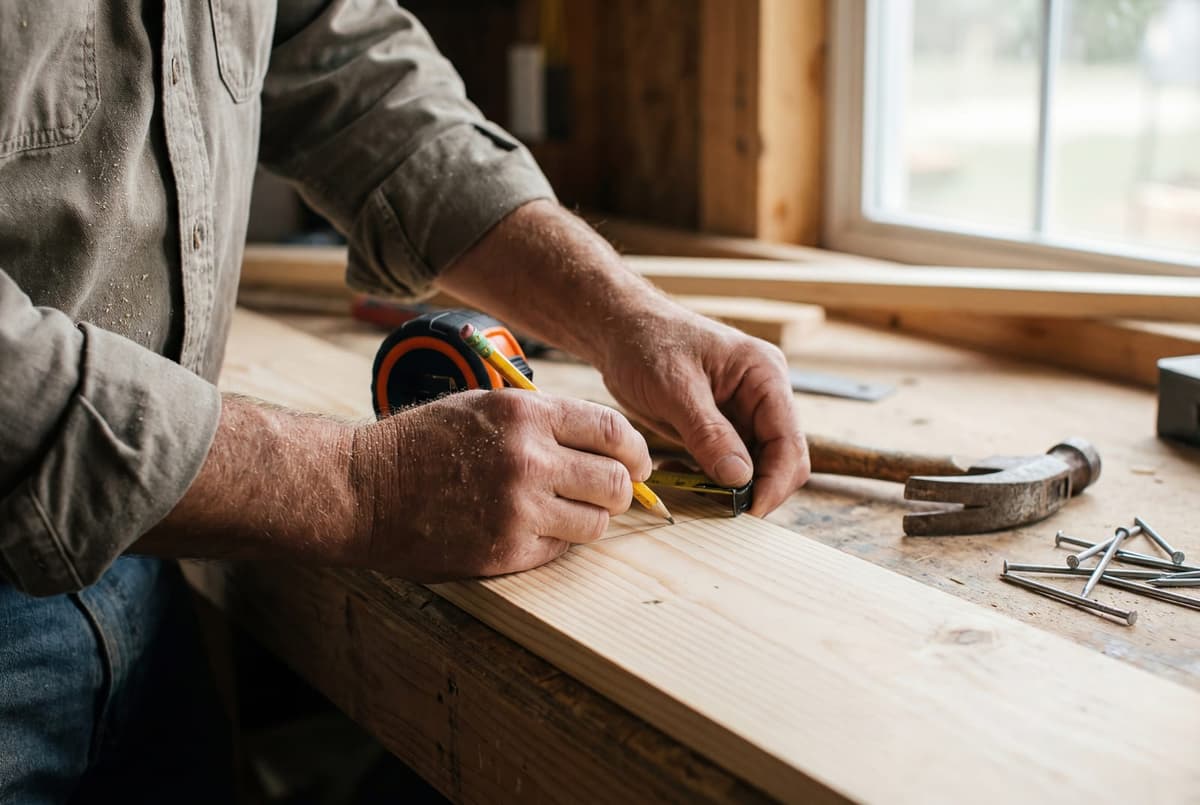
- We agree the position and height, checked from where you actually watch.
- I locate the structure and identify the wall type, then show you what I found.
- Your mount is checked against the TV, or the right one comes off the van.
- The bracket is anchored, levelled, and load-checked before the TV goes near it.
- The panel goes on, gets levelled again, and cable is routed as the wall allows.
- Everything is tested with your devices, and the work area is cleaned up.
What it costs
The four things that move it
There is no flat rate for a TV, because there is no flat wall. These are what change the number.
What a TV mount costs comes down to screen size, wall construction, access, and whether wires are being concealed.
- One
Screen size — bracket size, fixing spacing, and whether the lift needs two people.
- Two
Wall construction — a lag, a rated toggle, a sleeve anchor, or a longer fastener.
- Three
Access — furniture, fireplaces, tight corners, anything that has to move first.
- Four
Concealment — in-wall routing, a surface raceway, or leaving the cable as it is.
A $149 minimum applies to any visit, and you see the exact price before you book. Send a photo of the wall and the TV model when you book and the fixing can be worked out in advance.
Questions
Common questions
The six that come up on nearly every call.
Do I need to buy the mount, or do you bring one?
Either works. If you already have a bracket, I check that its VESA pattern and weight rating actually match your TV before it goes up. If you would rather I supply it, mention that when you book so the right one is on the van.
I have no idea what kind of wall I have.
That is normal, and it is not your job to know. I identify the wall construction on site and show you what I found before any hole gets drilled.
Can you hide the wires inside a block wall?
Not inside it — there is no cavity to route through. Instead the cable runs in a paintable surface raceway flat against the wall, which disappears once it is painted to match. Less invisible than in-wall, a long way better than a dangling cord.
How big a TV can you mount?
Size is rarely the limit — the wall and the bracket are. Large panels are very mountable given the right fixing, and on a big screen I would rather have a second pair of hands for the lift than risk the panel.
Can you mount above a fireplace?
Often yes, with two things checked first: whether the viewing height is actually comfortable from your seating, and whether the surface stays within your TV manufacturer's temperature limit. If either one fails I will tell you before drilling, not after.
Can you mount a soundbar at the same time?
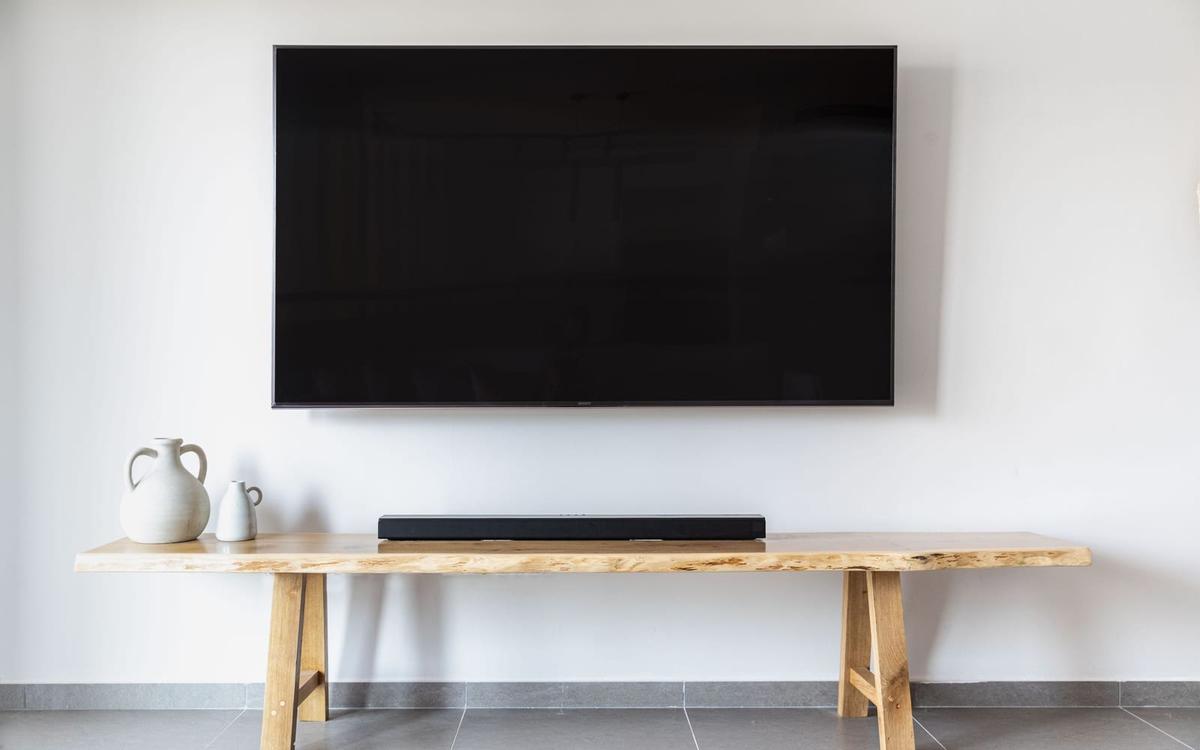
Yes — either bracketed to the panel or set on a shelf below it, aligned and levelled to the screen. Doing it in the same visit is much easier than coming back for it.
Next
Ready to get that TV on the wall?
Send a photo of the wall and the TV model when you book and I can tell you what the fixing will be before I arrive.
Looking for something else? All nine services.