
Preparing Your Home for a Sauna Installation (Power, Placement, and Ventilation)
A safe sauna install starts before delivery: confirm the power requirements, choose a level location, plan airflow, and protect nearby flooring and walls from repeated heat cycles.
Typical Cost
Varies by power
Severity
Medium to High
Time
Pre-check before delivery

What You Notice
A sauna may look simple, but heat exposes weak planning fast: poor airflow, uneven placement, overloaded circuits, and finishes that were never meant for repeated heat cycles.
What It Means
The install location, electrical circuit, ventilation, and nearby materials all need to work together before the first panel goes up.
Cost If Ignored
Bad prep can lead to tripped breakers, heater strain, warped flooring, swollen wood, damaged trim, or unsafe wiring.
When To Call
Call before delivery if you are unsure about voltage, amperage, dedicated circuits, GFCI protection, garage placement, outdoor placement, or wall and floor protection.
What I Usually Find
First Safe Checks
Pick a flat, stable location
A sauna needs a level surface so the frame does not twist. Even a small tilt can throw doors out of alignment and create heat-loss gaps.
Confirm voltage and amperage before delivery
Requirements vary by unit. Check your manufacturer’s specifications for voltage, amperage, and dedicated circuit sizing before the sauna arrives. Using the wrong power supply can cause poor performance, nuisance tripping, or a safety hazard.
Plan for airflow and humidity control
Small rooms need a way to breathe. Without airflow, moisture can build up, wood can swell, and the heater can work harder than it should.
Protect flooring and nearby walls
Repeated heat cycles can dry out vinyl, warp laminate, fade paint, and loosen trim. A heat-resistant mat or barrier can prevent long-term damage.
Cost Guide
Typical Repair Costs
Call Today If You Notice
- ◆The sauna requires 240V power and you only have a standard outlet nearby
- ◆The manufacturer calls for a dedicated circuit
- ◆The breaker trips when the unit heats up
- ◆The sauna will be installed in a garage, patio, or tight interior room
- ◆Nearby flooring, trim, or drywall may be exposed to repeated heat
- ◆You are not sure whether GFCI protection is required
“A sauna should heat your body, not your wiring.”
I’ve been in the trades a long time, and here’s the truth: a sauna only feels premium when the prep work is done right.
Heat is honest. It exposes shortcuts, weak materials, and bad planning faster than almost any other home upgrade. That is especially true here in Las Vegas, where desert summers, garage heat, dust, and high indoor temperatures can change how a sauna performs.
If you want your sauna to run safely, heat evenly, and last for years, the work starts before the first panel goes up.
Electrical: do not guess
This is the part homeowners underestimate the most.
A sauna is one of the highest-demand appliances you may add to your home. Treat it more like an oven or dryer than a space heater.
**Before you buy, verify:**- Required voltage (usually 120V or 240V)
- Required amperage (often 15A, 20A, or 30A)
- Whether the unit needs a dedicated circuit
- Whether GFCI protection is required
- Wire gauge requirements (14/2, 12/2, or 10/2)
- Manufacturer clearance requirements
No extension cords. No power strips. No shared circuits. Heat plus resistance is where wiring problems become dangerous.
If the panel doesn't already support a dedicated circuit where the sauna is going, that's new-circuit work for a licensed electrician to schedule before delivery day, not during it — it's outside minor non-permit electrical service.
Placement matters more than people think
A sauna needs a flat, stable surface.
If the floor is out of level, the frame can twist. When the frame twists, doors can stop sealing correctly, panels can shift, and small heat-loss gaps can show up.
For indoor installs, I look at:
- Floor level
- Nearby walls
- Ceiling height
- Clearance around the unit
- Door swing
- Access for service
- Distance to proper power
For garage installs, I also look at:
- Dust exposure
- Summer heat
- Concrete slope
- Moisture
- Nearby storage
- Airflow
A garage can work, but it needs more planning than a clean interior room.
Ventilation protects the sauna and the home
A sauna should heat the person inside it, not trap heat and moisture inside your walls.
Small rooms need airflow. Without it, you can end up with:
- Moisture buildup
- Wood swelling
- Heater strain
- Mold risk
- Stale air
- Poor temperature control
This does not always mean a complicated ventilation system, but it does mean the location needs to breathe.
A sauna tucked into the wrong corner can feel good for a few weeks and then start creating problems around it.
Protect the flooring and nearby finishes
Repeated heat cycles can be rough on nearby materials.
I pay close attention to anything near the sauna that could dry out, warp, loosen, fade, or separate over time.
That includes:
- Vinyl flooring
- Laminate flooring
- Painted drywall
- Baseboards
- Door trim
- Adhesives
- Caulking
- Cheap wall panels
A simple heat-resistant mat, barrier, or better placement choice can save you from long-term damage. Baseboard, trim, and finish-carpentry protection or repair around the install area falls under carpentry & trim.
Why prep matters more than the price tag
I’ve seen expensive saunas perform badly because the install was sloppy.
I’ve also seen more affordable saunas work beautifully because the prep was handled correctly.
Good prep gives you:
A sauna is a heat-pressure environment. If the foundation is wrong, the problems show up fast.
Before you buy, check the boring stuff
This is where homeowners can save themselves the most money.
- Where it will sit and whether the floor is level - Required voltage and amperage (check the spec sheet before buying) - Whether your panel can support a dedicated circuit - Whether the room has adequate airflow - What flooring, trim, or wall materials are near the heat - Manufacturer clearance requirementsThat boring checklist is what makes the final install feel clean, safe, and premium.
Final thought
A sauna is supposed to feel calm.
The install should not feel like gambling with your wiring, flooring, or walls.
Plan the power.
Pick the right location.
Give the unit room to breathe.
Protect the surfaces around it.
That is how you get a sauna that feels good on day one and still feels right years later.
Related Reading
- From Toolbelt to Tranquility: Choosing a Home Infrared Sauna Built to Last — evaluate the space and the unit before you order
- The First Places Budget Saunas Fail — what construction shortcuts to watch for
Common Mistakes
- ✕Buying the sauna before checking the electrical requirements
- ✕Using extension cords or power strips
- ✕Installing on an uneven surface
- ✕Ignoring ventilation in small rooms
- ✕Putting heat too close to sensitive flooring, trim, or painted surfaces
- ✕Assuming every sauna plugs into a normal outlet
FAQ
Can a sauna plug into a regular outlet?
Some smaller units can, but many require 240V power or a dedicated circuit. Always check the manufacturer’s requirements before buying.
Can I put a sauna in my garage?
Sometimes, but Las Vegas garages can get extremely hot and dusty. Placement, ventilation, and surface protection matter more in garage installs.
Do saunas need ventilation?
Yes. A sauna needs controlled airflow so heat, moisture, and humidity do not build up in the wrong places.
Should I check the electrical before delivery?
Yes. That is one of the smartest things you can do. It can prevent delays, change orders, and unsafe shortcuts.
Sauna Install Help
Planning a sauna install in Las Vegas?
I can help you check the location, power requirements, airflow, and surface protection before you spend money or schedule delivery.
Read Next
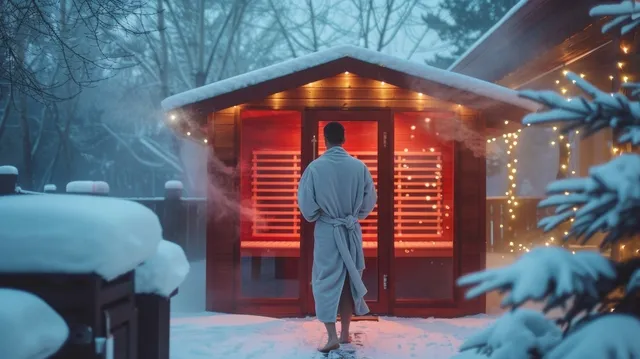
Home Wellness • Craftsmanship
From Toolbelt to Tranquility: Choosing a Home Infrared Sauna Built to Last
Read Article →

Buyer Beware • Sauna Quality
The First Places Budget Saunas Fail (And What Those Problems Reveal About Quality)
Read Article →
Signature Guide
The Las Vegas Homeowner's Survival Guide
Read Article →