Opening a cabinet and finding water where it should not be immediately raises two questions: how bad is this, and how much is it going to cost?
Most under-sink leaks are not disasters when caught early. The problem is that many homeowners do not notice them until the cabinet floor is swollen, the shutoff valve is stuck, or water has already reached the drywall.
Mike's Note
Drain Leak or Supply Leak?
Knowing which side is leaking changes how urgent the repair is.
If it only leaks when the sink is running, the issue is probably drain-side — P-trap, slip nut, drain gasket, tailpiece, or garbage disposal connection. Drain-side leaks are generally less expensive when caught early because the water is not pressurized.
If water appears even when the sink is off, the issue is supply-side — shutoff valve, braided supply line, or faucet connection. Supply-side leaks are more urgent because they continue whether the sink is used or not.
Pro Tip
What Usually Causes Under-Sink Leaks?
Most leaks come from the same handful of components:
- Loose drain connections that gradually loosen over time
- Worn washers and gaskets that no longer seal properly
- Cracked P-traps caused by age, impact, or overtightening
- Leaking shutoff valves under the sink
- Old braided supply lines beginning to fail
- Garbage disposal connections that loosen or leak
In Las Vegas, hard water accelerates most of these problems. Mineral buildup wears down seals, cartridges, and valve seats faster than you would expect.
Related: Hard Water Damage in Las Vegas: What Breaks, What I Repair, and When to Replace
Can You Fix It Yourself?
DIY repairs are reasonable when the leak is on the drain side, no water damage is present, shutoff valves work properly, and you have the correct replacement gasket or trap.
Cost Alert
Why Las Vegas Sink Leaks Can Get Worse Quickly
Hard water wears down seals and valve seats. Dry desert air makes rubber components brittle over time. Older shutoff valves seize if they have not been turned in years. And because most homeowners store cleaning supplies under the sink, a slow drip can stay hidden far longer than it should.
Mike's Note
What I Check During an Under-Sink Repair
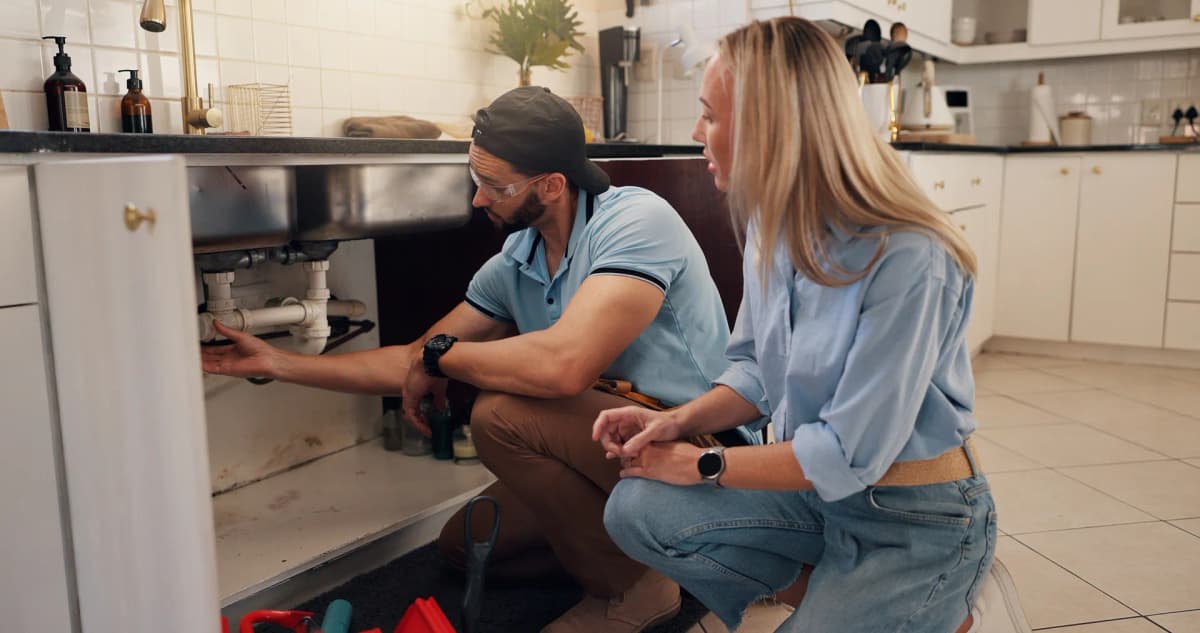
When I inspect an under-sink leak, I look at more than the obvious drip — trap condition, drain alignment, slip nut and gasket condition, faucet connections, braided supply lines, shutoff valves, cabinet floor condition, and signs of previous water damage or hard-water buildup.
Quick Win
A sink leak is one of those repairs that is almost always cheaper when handled early. If you see water under the sink, do not wait for it to become obvious. Obvious usually means expensive.
Under-sink work — traps, slip nuts, supply lines, shutoff valves and faucet connections — is standard plumbing repair work. If the leak turns out to be inside a wall or below the slab, that is a licensed plumber's job, and I will say so rather than open up drywall to find out.