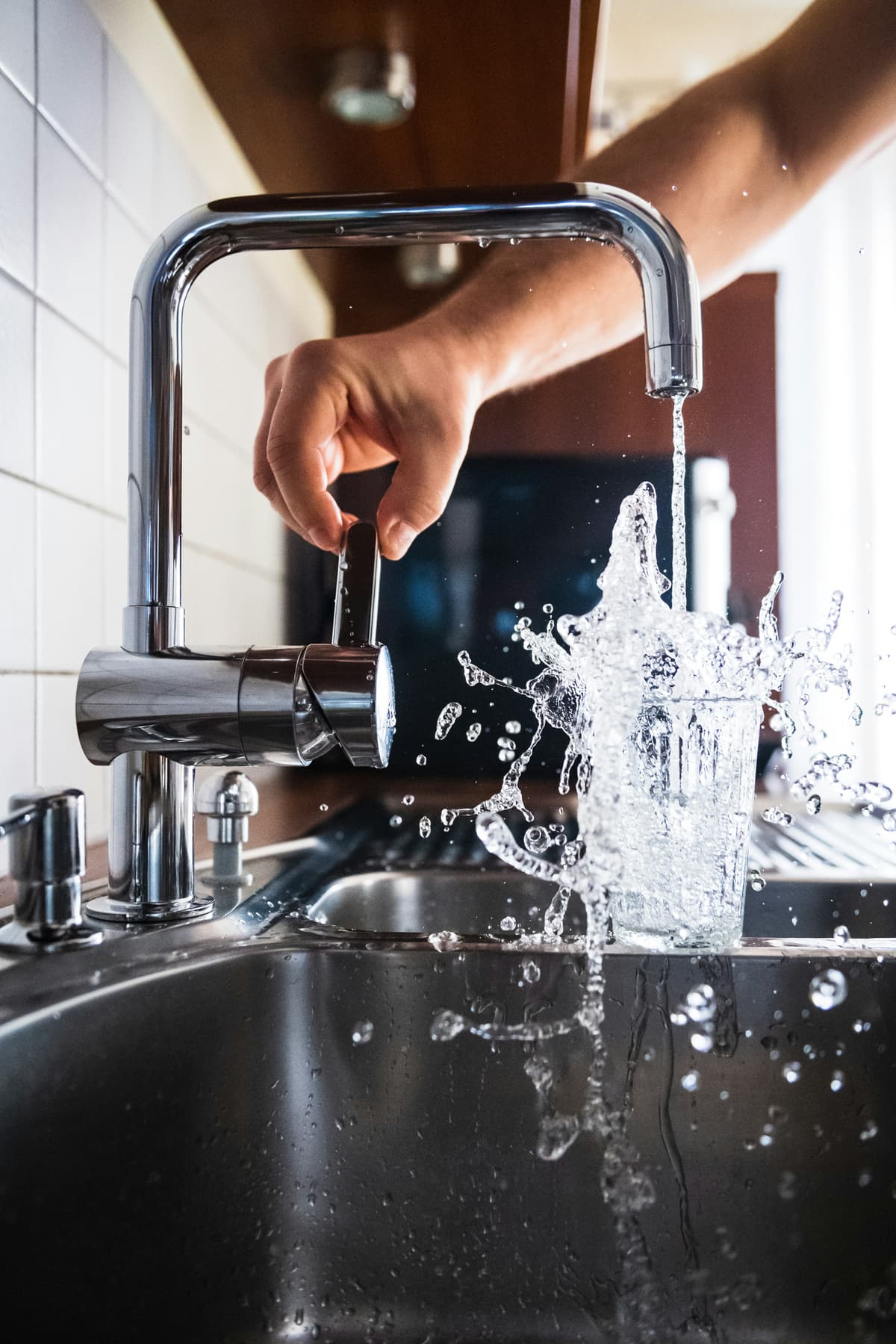
Las Vegas has some of the hardest municipal water in the United States.
Most homeowners notice the white spots on the shower glass.
Very few notice what those same minerals are doing inside the plumbing they can't see.
Scale builds slowly. Water heaters lose efficiency. Valves become stiff. Showerheads clog. Appliances work harder year after year.
The damage is quiet.
Until it isn't.
What Exactly Is Hard Water?
Hard water contains elevated levels of dissolved minerals — primarily calcium and magnesium — picked up as groundwater moves through rock and soil before reaching your tap.
Hardness is measured in grains per gallon (gpg) or parts per million (ppm):
| Classification | gpg | ppm |
|---|---|---|
| Soft | 0–3 | 0–50 |
| Moderately Hard | 4–7 | 51–120 |
| Hard | 8–10 | 121–180 |
| Very Hard | 11+ | 180+ |
Las Vegas typically measures 16 to 18 gpg — well above the "very hard" threshold and more than double the national average of around 7 gpg. Most water-treatment products marketed as "hard water" solutions are designed for 10–12 gpg. Las Vegas water frequently exceeds them.
Why Las Vegas Water Is So Hard
Las Vegas draws most of its supply from Lake Mead and the Colorado River. That water travels through calcium-rich limestone and desert rock formations before it reaches the treatment plant.
Water treatment removes bacteria, adjusts pH, and makes the water safe to drink. It does not remove mineral content. The calcium and magnesium stay in the water all the way to your pipes, fixtures, and appliances.
More than double the national average. Most "hard water" products are engineered for 10–12 gpg. Las Vegas water regularly exceeds them.How to Test Your Water
Before spending money on any solution, get your actual number first. System sizing depends on it.
Pro Tip
What Hard Water Does Inside Your Home
This is where most homeowners are surprised. They know about the spots on the glass. They don't know what's happening inside the pipes, the water heater tank, and the valve bodies they can't see.
Water Heater
The water heater takes the hardest hit of any appliance in a Las Vegas home.
As water heats, minerals precipitate out of solution and settle at the bottom of the tank as sediment. Over time, that sediment layer:
- Acts as insulation between the burner and the water, reducing efficiency
- Forces the heater to run longer cycles to reach temperature
- Accelerates corrosion of the tank lining and anode rod
- Causes the popping or rumbling sound you hear when the burner fires through the crust
- Shortens heating element life in electric models
Annual flushing removes sediment before it hardens into a permanent layer. It's one of the highest-return maintenance tasks in a Las Vegas home. If the drain valve has never been opened, it may already be seized — that's when to call a pro rather than force it.
Showerheads and Faucet Aerators
The small holes in showerhead nozzles and faucet aerators accumulate scale faster than any other fixture. White or gray crusty buildup reduces flow, creates uneven spray patterns, and eventually blocks the worst-affected holes entirely.
Most homeowners don't notice until their shower feels noticeably weaker — by which point the head may be operating at half its original flow rate or less.
Fill a plastic bag with undiluted white vinegar, submerge the showerhead, secure it with a rubber band, and leave it overnight. Most light-to-moderate scale dissolves completely. Heavy buildup means replacement is faster than cleaning.
Shutoff Valves and Angle Stops
This is the failure that surprises homeowners most.
Shutoff valves under sinks and behind toilets are critical safety devices. In an emergency — a burst supply line, a flooding toilet, a failing fixture — you need to turn that valve off immediately.
Hard water slowly deposits minerals inside the valve body. Valves that are never operated can go from stiff, to difficult, to effectively seized over years of scale accumulation.
Test every shutoff valve in your home once a year: turn it fully off, then fully back on. A valve that won't move in a calm test will not move in an emergency. A seized valve turns a minor repair into a flooded room.Toilets and Fill Valves
Scale buildup inside toilet fill valves causes ghost flushing, running toilets, and valves that won't shut off cleanly. If your toilet runs intermittently — fills, pauses, fills again without being flushed — scale on the fill valve or flapper seat is the most common cause in a Las Vegas home.
Dishwasher and Washing Machine
Heating elements accumulate scale just like water heater elements do. The result is longer cycle times, higher energy use, cloudy glassware, and a shorter appliance lifespan. Running a descaling tablet through an empty hot cycle once a month slows the accumulation significantly.
Supply Lines
Over many years, mineral scale narrows the interior diameter of supply lines and concentrates at the fittings. If multiple fixtures show reduced flow even after cleaning aerators and showerheads, aging supply lines and angle stops are worth inspecting.
Softener vs. Conditioner vs. Filter
These three categories solve different problems. Choosing the wrong one is a common and expensive mistake.
| Feature | Traditional Softener | Salt-Free Conditioner | Filter / RO |
|---|---|---|---|
| Removes hardness minerals | ✅ Yes | ❌ No | ✅ RO only, at one tap |
| Prevents scale buildup | ✅ Yes | ✅ Partially | ✅ At point of use |
| Requires salt | ✅ Yes | ❌ No | ❌ No |
| Whole-house coverage | ✅ Yes | ✅ Yes | ❌ Usually single point |
| Improves water taste | Sometimes | No | ✅ Yes (RO) |
| Best for | Full plumbing protection | Scale reduction without salt | Drinking water quality |
Traditional Ion-Exchange Water Softener
Replaces calcium and magnesium ions with sodium through a resin bed. The most effective solution for Las Vegas hardness levels.
Best for: Whole-house protection, extended appliance life, fixture preservation
Considerations: Requires salt refills every 6–8 weeks; generates brine discharge; many households pair it with an under-sink reverse osmosis unit for drinking water
Installed cost: $800 – $3,000+ depending on capacity and brand
Salt-Free Conditioner
Changes the crystalline structure of minerals so they're less likely to deposit on surfaces. Does not remove minerals.
Best for: Homeowners who want scale reduction without salt maintenance or added sodium
Limitation: Less effective than a traditional softener at 16–18 gpg. Not recommended as the sole solution if appliance protection is the primary goal.
Installed cost: $300 – $1,500
Reverse Osmosis (Point of Use)
Highly effective at producing clean, mineral-free water at a single tap. Does not treat whole-house plumbing.
Best for: Drinking and cooking water quality — commonly paired with a whole-home softener
Installed cost: $200 – $600 for an under-sink unit
The Real Cost of Ignoring Hard Water
Here's what unaddressed hard water typically costs Las Vegas homeowners over a 10–15 year window:
- Water heater replacement 3–5 years early — $800 – $2,000+
- Fixture and showerhead replacements — $200 – $800 cumulative
- Seized shutoff valve replacement — $150 – $400 per valve
- Appliance energy loss — estimated 20–30% higher operating cost on scale-affected heating elements
- Early appliance replacement — $500 – $1,500+
A whole-home softener installed for $800 – $3,000 typically pays for itself through extended appliance and fixture life within 5–8 years in a Las Vegas home.
Annual Hard Water Maintenance
Start here before committing to a larger investment. These tasks take less than an hour and catch problems before they compound.
- Test water hardness with a test strip (takes two minutes) - Flush sediment from water heater — or schedule a professional flush if the drain valve hasn't been opened in years - Soak showerheads in white vinegar overnight; scrub nozzles - Unscrew and clean all faucet aerators - Test every shutoff valve — it should turn smoothly off and fully back on - Run a descaling tablet through the dishwasher on a hot empty cycle - Inspect toilet fill valves for ghost flushing or running after flush - Check supply line fittings under sinks for scale buildup or corrosionRecommended Products
This section contains affiliate links. If you purchase through them, I may earn a small commission at no added cost to you. I only link to products I'd recommend to a homeowner here in Las Vegas.
Test Your Water First
Know your number before spending money on equipment.
- Varify 17-in-1 Water Test Strips — Quick screen for hardness, pH, and chlorine; good for a household baseline
- HM Digital TDS-3 Meter — Useful for tracking total dissolved solids over time
- API Hard Water Test Kit — Accurate liquid test; the same format used in professional assessments
Whole-Home Water Softeners
- Whirlpool WHES40E 40,000 Grain Softener — Well-regarded for a 3–4 person Las Vegas household; straightforward to maintain
- Pentair Fleck 5600SXT — Popular with plumbers and installers for long-term reliability and rebuildability
- GE GXSH40V 40,000 Grain Softener — Good mid-range option with an intuitive control panel
Salt-Free Conditioners
- Aquasana Whole House Salt-Free Conditioner — Solid performance for scale reduction without sodium or regeneration cycles
- Pelican NaturSoft System — Consistently reviewed well for low-maintenance households
Showerheads for Hard Water
- AquaBliss SF220 Filtered Showerhead — Built-in filtration and rubber nozzles that resist scale
- Aqua Elegante High-Pressure Showerhead — Easy-clean silicone nozzles; good flow at low pressure
Descaling Products
- CLR Calcium, Lime and Rust Remover — Effective on faucets, aerators, and fixture surfaces
- Finish Dishwasher Cleaner Tabs — Monthly descaling for dishwasher heating elements and spray arms
Frequently Asked Questions
Is Las Vegas tap water safe to drink? Yes. SNWA treats the water to federal and state standards. Hard water is a plumbing and appliance risk, not a health risk.
Does hard water damage pipes? It narrows supply lines over time and damages valves and fittings, but modern copper and PEX plumbing handles it fairly well. The bigger impact is on fixtures, appliances, and water heaters.
Should I soften the whole house or just the kitchen? For plumbing and appliance protection, whole-house treatment makes the most sense. An under-sink reverse osmosis unit at the kitchen tap is a common add-on for drinking water quality, but doesn't help the rest of the house.
Is a salt-free conditioner as effective as a softener in Las Vegas? Not at 16–18 gpg. Salt-free conditioners reduce scale adhesion but don't remove minerals. At Las Vegas hardness levels, a traditional softener provides meaningfully better long-term protection.
How often should I flush my water heater? Once a year in Las Vegas. If the heater is already making popping or rumbling sounds, schedule a professional flush rather than forcing a drain valve that hasn't been opened in years.
Why does my shower glass never stay clean? Hard water leaves a mineral film every time water evaporates from the surface. No cleaner prevents it if the water isn't treated. A softener eliminates the problem. A squeegee immediately after showering significantly reduces it.
Will a softener affect my skin and hair? Positively, for most people. Soft water rinses more completely, lathers more easily with soap, and is gentler on skin and hair.
How long does a water softener last? A quality softener typically lasts 15–20 years. The resin bed usually needs replacement or rejuvenation around the 10–15 year mark.
Can I install a water softener myself? It involves connecting to the main supply line and a drain. Experienced DIYers can do it, but improper sizing or installation leads to poor performance. Professional installation is recommended for most homeowners.
Does SNWA treat for hard water? No. SNWA treats for bacteria, pH, and safety contaminants. Hardness minerals are not removed in the municipal treatment process.
Related Reading
This guide covers the water itself — how hard it is, how to test it, and how to treat it. If something in your house has already failed and you need to know whether it can be repaired or should be replaced, that is the companion piece.
- Hard Water Damage in Las Vegas: What Breaks, What I Repair, and When to Replace — the repair side, from the service calls
- The Las Vegas Homeowner's Survival Guide — hard water is one of five things working on your house; this covers heat, UV, seals, valves and stucco too
- Preventative Home Maintenance in Las Vegas: 12 Pro Tips to Avoid Costly Repairs
- Cracks in the Desert: What Las Vegas' Housing Boom Left Behind