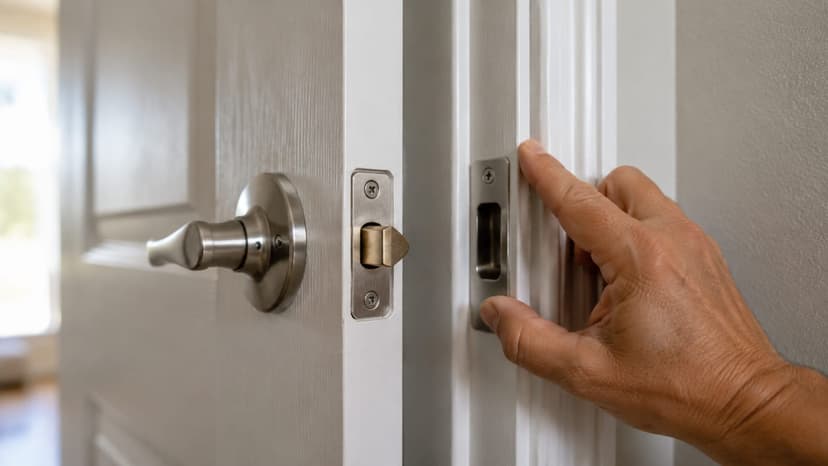
When I price a repair, I have to account for the complete service call—not only the minutes you see me using a tool.
My minimum starts at $149. That number covers the whole visit rather than the stretch of it where you can see me working. Once you know what sits inside a service call, most of the pricing questions answer themselves.
Mike's Note
What the $149 minimum means
It is a floor, not a package. It is the least a visit can cost, not a block of labor you have purchased in advance and not a promise that any particular repair fits inside it.
I want to be plain about that, because "minimum" gets read two different ways. It does not mean:
- a guaranteed number of hours or minutes on site
- a credit that automatically applies to a larger project later
- a fixed price for whatever turns up once I open things up
What it does mean is that below a certain point, a trip across the valley stops being possible to do properly. Small jobs still carry the same drive, the same setup, the same testing and the same cleanup as bigger ones.
The part of the service call you do not see
A repair that takes fifteen visible minutes is rarely fifteen minutes of work. The rest of it looks like this:
- reading your description and photos, and working out what the job probably needs
- deciding which tools, fasteners and stock to bring so a second trip is not required
- loading and driving — a round trip across Las Vegas is usually 40 to 60 minutes in traffic
- diagnosing the actual cause rather than the symptom you noticed
- sourcing a part if the right one is not already on the truck
- setting up, protecting floors and finishes, doing the work
- testing it, cleaning up, and hauling away the old material
None of that is padding. It is the job. The visible repair is the last stage of a process that started when you sent the first message.
Photo estimates and field estimates
I can often price straightforward work from a clear description and useful photographs. That saves you a visit and saves me one, and when the scope is genuinely obvious it is the fastest way to get you a number.
Some work cannot be priced that way. When the cause is hidden, when access is unclear, or when what you are describing could be three different problems, it needs an on-site look first. Some estimates are free; others are charged, depending on the job and how much inspection it takes to answer the question honestly. I would rather tell you that upfront than quote a number I would have to walk back.
If I am already there for a paid inspection and it turns out to be something I can reasonably handle in the same visit, I will explain the scope, adjust the price sensibly, and get your approval before I start. Larger or more involved work gets its own scope and its own price.
Pro Tip
Why a "simple" repair sometimes is not
Two examples come up constantly.
"It is just an outlet." Sometimes it is. Sometimes the receptacle is the visible symptom of something behind it — damaged wiring, a breaker problem, or a connection that has been failing quietly for a while. Until it is opened up and looked at, nobody can tell you which one you have. I stay inside non-permit scope, and if what I find belongs to a licensed electrician, I will say so rather than work around it.
"It is just a hinge." Also sometimes true. But a new hinge does not fix anything if the jamb it screws into is chewed out and no longer holds a screw. Put a fresh hinge on damaged material and you have bought yourself the same problem again in a few months. The wood has to be repaired or reinforced first, and that is a different job than swapping hardware.
Neither of these is a bait and switch. It is the difference between the thing you noticed and the thing causing it. If you want the longer version of how I work that out, I wrote about how I diagnose hidden home problems separately.
Grouping small repairs into one visit
This is the single easiest way to get better value out of a service call, and almost nobody does it.
If you have a sticking door, a running toilet, two loose towel bars and a light fixture that needs swapping, those are four separate minimums if you call four separate times. Handled in one organized visit, the drive, the setup and the cleanup happen once.
Walk the house before you call. Write down everything, including the things you have been ignoring. Send that list with your photos. It is worth more to you than any discount I could offer.
Quick Win
Materials and why compatibility matters
I am flexible about who supplies materials, but I would rather supply them when it is practical, because then I can confirm the part actually matches what is installed before I am standing in your kitchen.
You are welcome to buy your own. If you do, confirm the exact product with me before you purchase it. The failures I see are almost always the same handful:
- the size is close but not right
- the mounting type does not match the existing bracket or backing
- the connection or thread is a different standard
- it is a replacement part for a similar-looking model, not yours
- the fixture specification does not suit the location
A part that does not fit can stop the work, add sourcing time, or require another visit before the repair can be completed.
How to ask for a useful estimate
The more specific you are, the faster and more accurate the answer:
- Say what is happening, in plain language.
- Say what you want fixed, and what you would settle for.
- Send several photos — close, wide, and a couple of angles.
- Include labels or model numbers if the fixture has them.
- Mention anything you have already tried, including previous repairs.
- List everything else you want looked at while I am there.
That last one matters more than people expect. It changes what I bring with me.
Common questions about handyman pricing
Is the $149 an hourly rate?
No. It is the minimum for a service call. Hourly framing is misleading for this kind of work, because the drive, the setup and the cleanup happen regardless of how long the actual repair takes.
Will you tell me the price before you start?
Yes. If the scope changes once I can see the real cause, I stop, explain what I found, and get your approval before continuing.
Are estimates free?
Some are. Straightforward work I can often price from photos at no charge. Jobs that need an on-site diagnosis may carry a fee, because that inspection is real work. I will tell you which one yours is before you commit.
Does the minimum get credited toward a bigger job?
Not automatically. If an inspection turns into a repair I can complete during the same visit, I will make a reasonable adjustment and explain it. Larger projects get quoted separately.
Can I save money by buying the parts myself?
Sometimes, but check the exact product with me first. The savings disappear quickly if the part does not fit and the visit has to be rescheduled.
Where to go next
If you already know what you need, the service pages list what I take on and where the scope ends. For the everyday list — drywall, trim, doors, fixtures and hardware — start with general repairs. If you want to see how a specific repair gets priced in practice, the under-sink leak cost guide walks through one job end to end.
Send photos and a short description and I will tell you whether it is something I can price from here or something that needs a look first.